
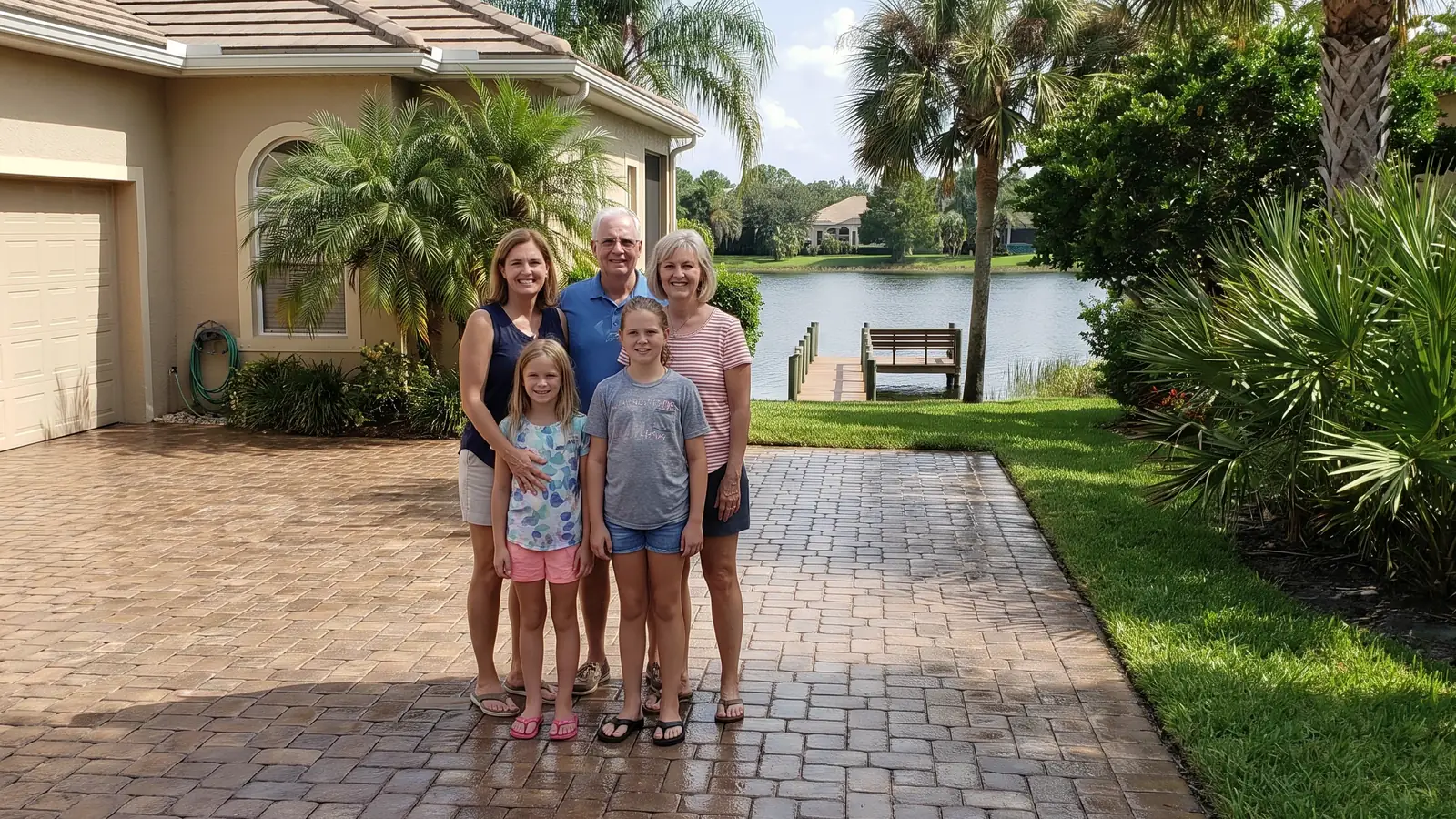
Paver sealing for Clearwater homes
Paver Sealing in Clearwater, FL
Clearwater pavers from the downtown bluff to the beach causeway: call (727) 591-3365 for a free sealing estimate.
- Brings out deeper paver color
- Fresh joint sand helps lock pavers in place
- Gives weeds less room to grow
- Makes the surface easier to keep clean
- Free estimate, no obligation
Request a Free Estimate
Free, no obligation.
Fast, careful paver sealing in Clearwater
Paver sealing in Clearwater covers the mainland streets, the neighborhoods by the harbor and the homes out toward the beach. A local contractor washes, re-sands and seals driveways, pool decks, lanais and walks, with no charge for the estimate. Within 1 business day, usually much sooner, you will have a reply after you request a free estimate.
Maybe your pool deck has gone chalky and the driveway has a gray cast by the garage. After a wash, new joint sand and a fresh coat, the color evens out and the surface looks cared for again. For a quick answer first, call (727) 591-3365 and describe what you have.
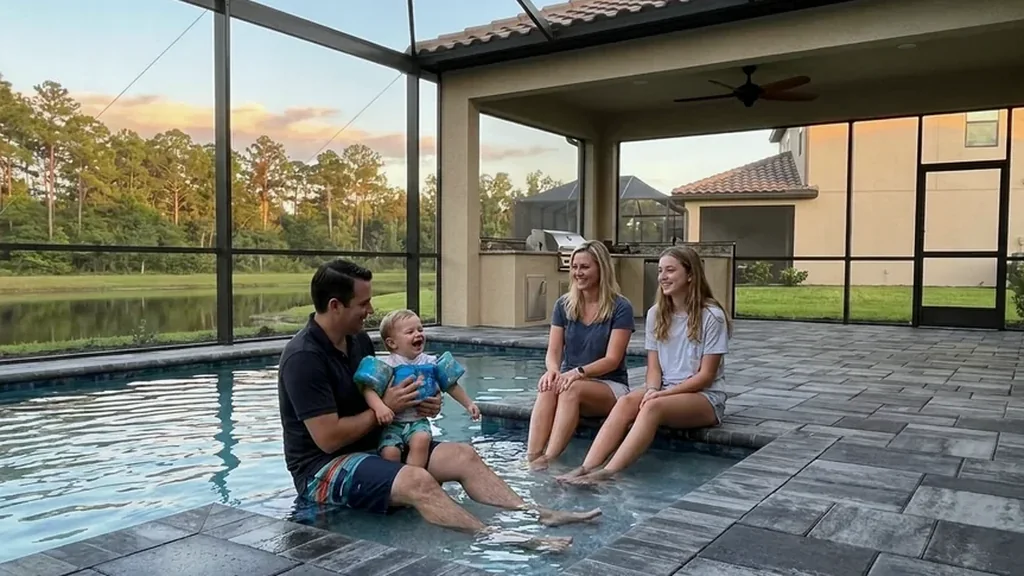
Why hire a local paver sealing contractor in Clearwater?
Clearwater is a city of two settings, a mainland of bluffs and tree-lined streets and a barrier island of sand and salt air. A contractor who knows both can match the job to your lot, so request a free estimate and say which one is yours. A short call is enough to start. That keeps the plan honest.
A free walk-through
Someone measures your Clearwater pavers and puts a price in writing. You are free to walk away from it. Ask anything you like.
A range to judge bids
Around Tampa Bay, $1.25 to $2.50 a square foot is the published spread for cleaning, sanding and sealing.
Beach side or mainland side
A deck by the Gulf and a drive under mainland trees wear differently, so each gets its own wash and finish.
Grip on the deck
Matte keeps footing safer around a pool, and a wet look suits a front entry. You decide, case by case. Say how the surface is used.
Get Your Free Estimate in Clearwater
Tell us about your pavers in Clearwater.
Free, no obligation
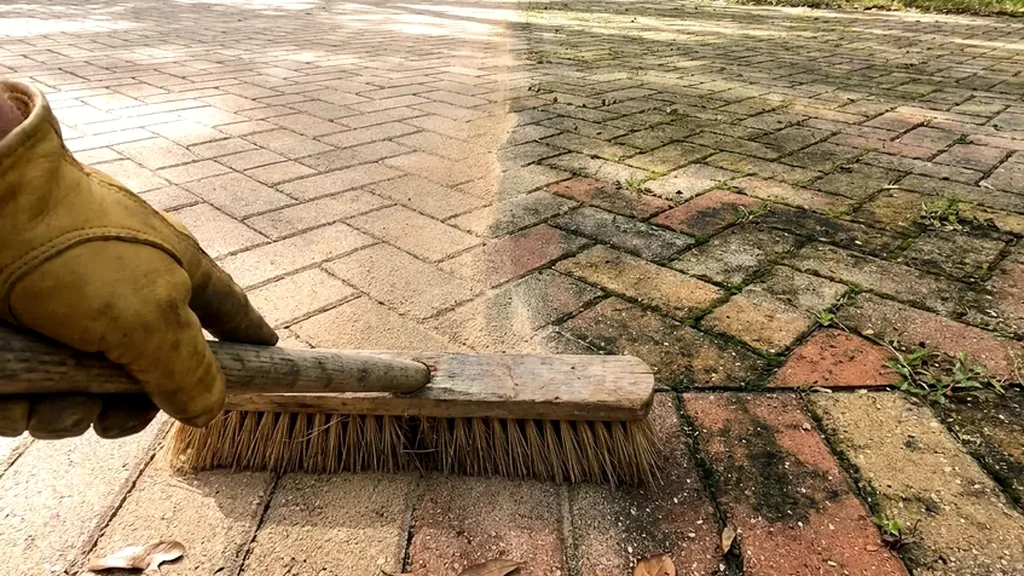
What paver problems show up most in Clearwater?
Salt air near the Gulf and the harbor
Clearwater Beach sits on a barrier island facing the Gulf, and the city is more than a third water. A Largo paver company says a seal near the coast typically lasts two to three years because of salt. Salt film is washed off before sealing, since a coat over it traps it. Ask the contractor to look at the edge of the driveway nearest the water, since salt film tends to build there first and tells you how long the wash should take. The film builds slowly, so many owners notice it only after the sun has bleached the color, and a wash is the quickest way to see what the pavers look like. Ask the contractor to look at the edge nearest the water first.
Pool decks and lanais that stay damp
Pool decks collect water, sunscreen film and algae, and a lanai keeps its pavers out of direct sun. A company that seals in Clearwater says the wet look is popular on decks but slicker when wet. So the finish for a deck is about grip as much as color. A deck that feels slick underfoot after rain is worth mentioning at the first visit, since the finish can be chosen to improve grip. Screened lanais keep some rain off, but corners and the base of planters can still hold moisture. Those spots are where the wash lingers.
Joint sand lost in the wet season
Clearwater's rain falls mostly from June through September, in daily thundershowers. Heavy rain pulls sand out of the joints, and weeds fill the gaps. New sand is swept in after the wash and before the sealer, so the joints are locked when the coat dries. A driveway whose joints look thin by late summer is a sign the sand has gone, and sealing without new sand would only lock in the gaps. After a heavy week of thunderstorms, the lower end of a driveway often shows a fan of sand where the water exited. Refilling that fan is the first job once the surface is dry. Joint sand is a small cost beside the damage emptied joints invite.
Old sealer that has hazed or peeled
A company that works Clearwater says it strips a failed or hazed sealer back to bare paver before starting fresh. Mixing the two types fails, so the contractor identifies the old product before choosing a new one. A cloudy patch usually means moisture got trapped under an earlier coat. If you recall who sealed your pavers or what year, share it at the visit. Even a rough guess helps the contractor choose a product that bonds. A cloudy or milky patch usually traces to a past job where the pavers were sealed while damp. Stripping it back takes more time than a plain wash, which is why a test spot matters.
Rust from sprinklers and well water
Most Florida well water is high in iron, and irrigation that uses it leaves orange fans on pavers. The marks sit near sprinkler heads and along driveway edges. Rust is treated in the wash, because sealer would fix the stain in place. Moving a sprinkler head back from the edge helps keep the stain from returning after the new coat goes on. Rust also shows near pool equipment and metal fence posts, and those spots need hand treatment instead of the general wash. A sprinkler head moved a foot back from the edge keeps the stain from returning after the new coat goes on.
Does a beach driveway need a different plan than one on the mainland?
Usually, yes, because salt and shade are not evenly spread. Clearwater Beach sits on a barrier island with 2.5 miles of Gulf sand, and Sand Key lies just south of it. On the mainland, trees and older lots hold more moisture, so tell the contractor which side of the causeway you live on when you request a free estimate.
A paver company based in Largo lists inland neighborhoods around Countryside, Idlewild and Skycrest, plus island condos and canal-front homes. That range is wide, so the contractor looks at each surface before pricing. Call (727) 591-3365 and give your cross streets so the first visit starts with the right questions. That makes the first conversation quick.
Downtown sits on the old bluff above Clearwater Harbor, where Fort Harrison once stood. North Greenwood has its own library from 1950, and Countryside has one too. Housing and paver age vary across those areas, so a walk-through matters more than a flat price. To book one, request a free estimate.
What does paver sealing cost in Clearwater?
Three things move a Clearwater quote: salt film, old sealer and thin joints. Around Tampa Bay the published spread is $1.25 to $2.50 per square foot, and a clean, tight deck lands near the bottom. A failed coat that must be stripped lands near the top. Call (727) 591-3365 to place yours.
Area adds up fast with a pool deck, a lanai and an entry walk beside the drive. Screened enclosures slow the work too, since taping and carrying take time. Ask for a line-by-line quote when you request a free estimate. That keeps the total easy to read.
| Paved area | Typical example | Clean, sand and seal |
|---|---|---|
| 300 sq ft | Small patio or walkway | $375 to $750 |
| 600 sq ft | Two car driveway | $750 to $1,500 |
| 1,000 sq ft | Large driveway or pool deck | $1,250 to $2,500 |
| 1,500 sq ft | Driveway plus pool deck | $1,875 to $3,750 |
Math based on the $1.25 to $2.50 per square foot that Tampa Bay paver companies publish. Your contractor sets the actual price after seeing the surface. Repairs, leveling and stripping failed sealer are usually extra.
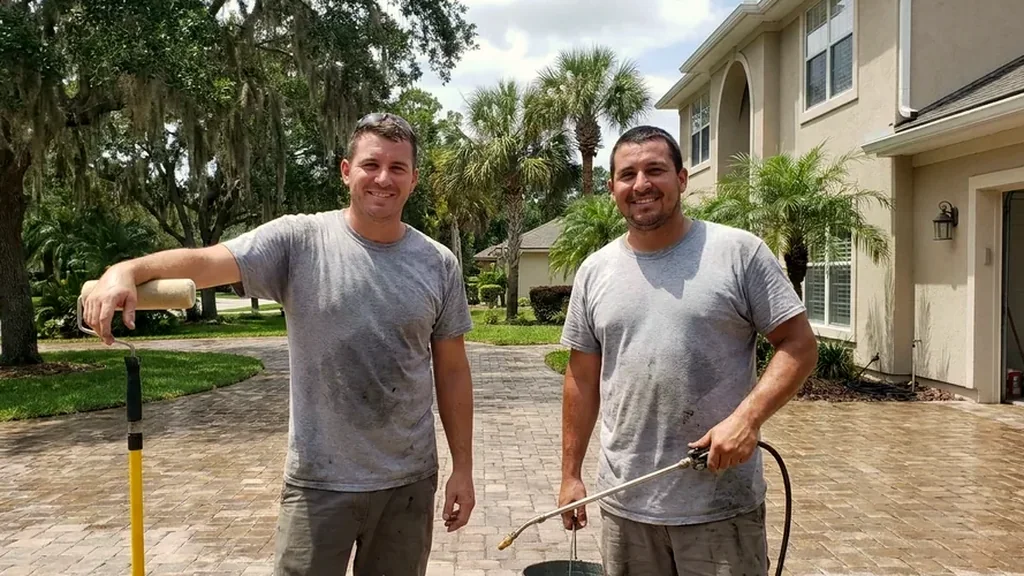
How does a paver sealing job work in Clearwater?
Look, ask, test
The contractor walks each area and asks what was used before. If the old coat is unknown, a small test spot helps decide. Failed or hazy sealer is marked for stripping, and sunken pavers are marked for resetting. Notes about shade, slope and past work go into the quote so nothing is a surprise.
Wash with the inlet covered
A dry sweep clears the grit, the street inlet gets covered and then the wash begins. Salt film, sunscreen residue, algae and rust come off the face of the pavers and out of the joints. Each section is finished before the next begins, so no dirty film dries on a rinsed paver. Pool coping and steps get a closer pass, since film settles there.
The dry check
Pavers and joints must be dry all the way through. Shade on the mainland and humid air by the water can both stretch that. Sealing over a damp surface leaves a cloudy coat that has to be redone. A fingertip pressed into a joint tells you whether sand has set. A cloudy week by the water can stretch this stage, and the contractor will say so.
Re-sand and compact
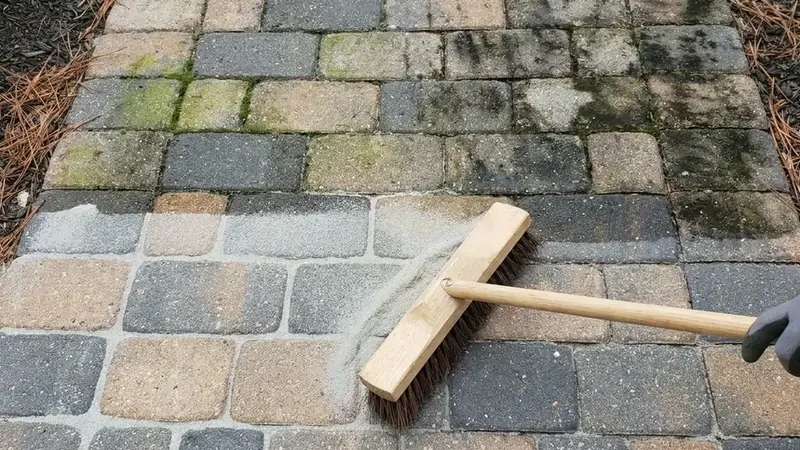
New joint sand is brushed in and packed down across the whole area. Curb edges and pool coping, where water runs hardest, get a second pass. If the joints still look full after the first big storm, the sanding held.
Sealer and release time
The finish you picked goes on in an even coat. You get one time for feet and another for tires before the crew leaves, so there is no guessing on the first day. A test patch near the entry shows the sheen before the whole surface gets it.
Complete paver services in Clearwater
Think of a Clearwater job as five handoffs: inspect, wash, dry, sand, seal. A late handoff shows up as haze or peeling, which is why the order never changes. Ask for the schedule when you request a free estimate, and for any step that tends to run long on your lot. Clear dates beat a vague promise.
Driveways, pool decks, lanais and entry walks each wear their own way. Decks collect film and algae, and drives take tires, while entries near the water pick up salt. List what you have when you call (727) 591-3365. Each gets its own setting.
Finish is a trade between depth and grip. Matte suits a deck because it keeps traction, and a wet look gives deeper color but is slick when wet. A product that cannot go over what is already there is ruled out early. For help, request a free estimate.
Most rain falls from June through September here, so the dry season from October through May is easier on drying and curing. A storm can still bump your date by a day or two. Call (727) 591-3365 to find an open week.
Questions to ask before you hire
- If I give you one flat number, which jobs on the checklist does it pay for?
- What do you do to protect my lanai furniture, my shrubs and the lawn edge?
- My pool uses salt. Will the sealer or the rinse water bother it or the screen cage?
- My sprinklers left orange spots near the garage. Can those come out?
- Would a wet-look or a natural-look finish suit my pavers better, and what changes between them?
- After a downpour, how many dry days do you want before you start?
- What is the earliest day that my garage door and my cars can be used again?
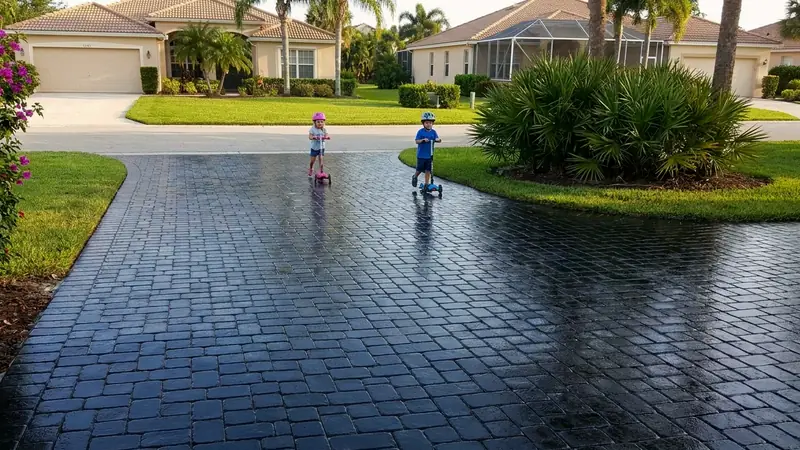
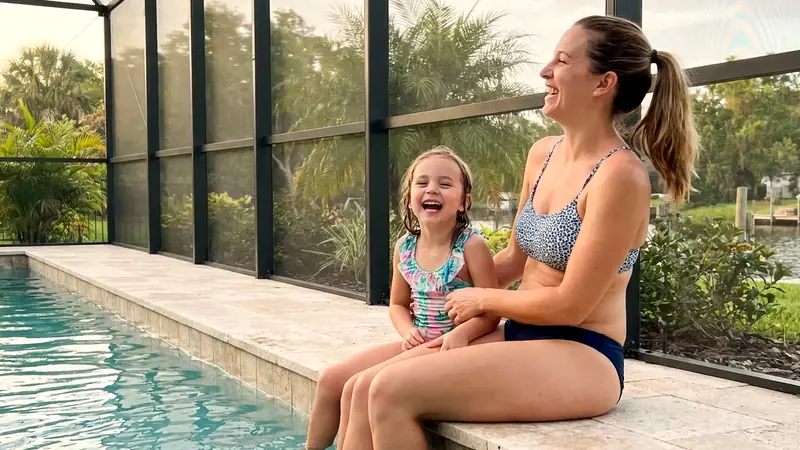
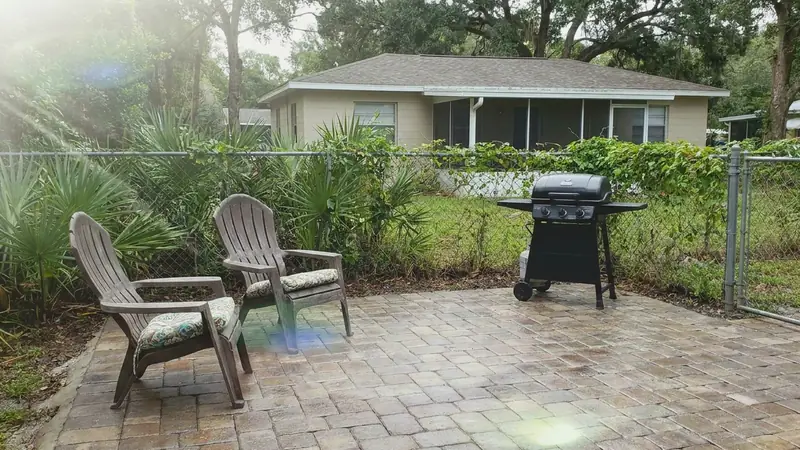
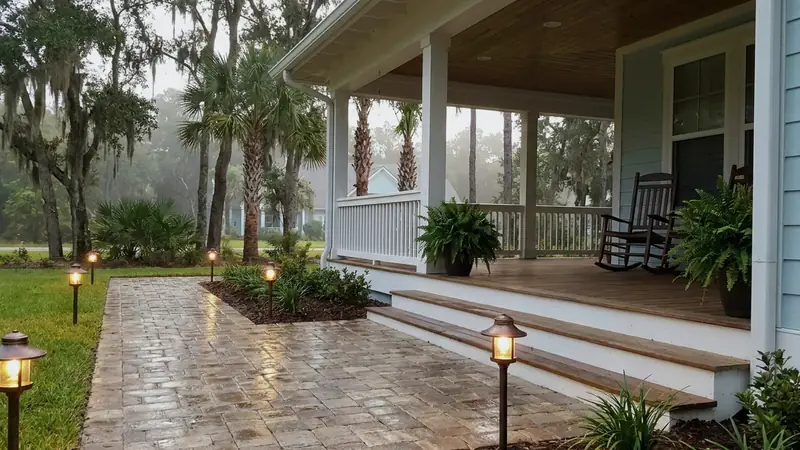
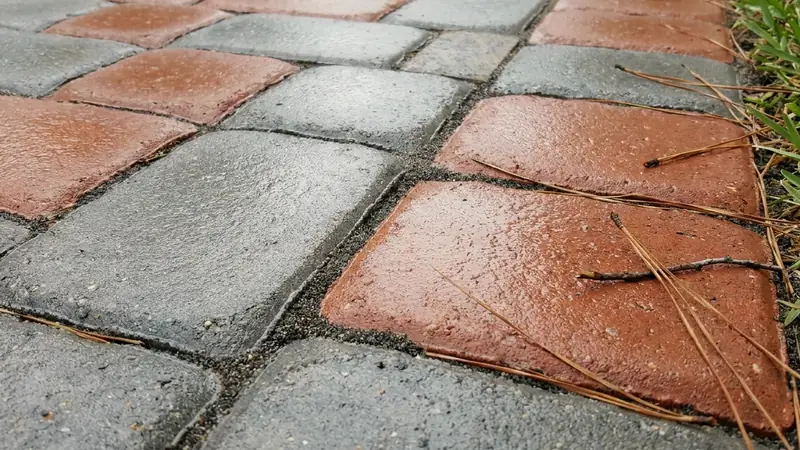
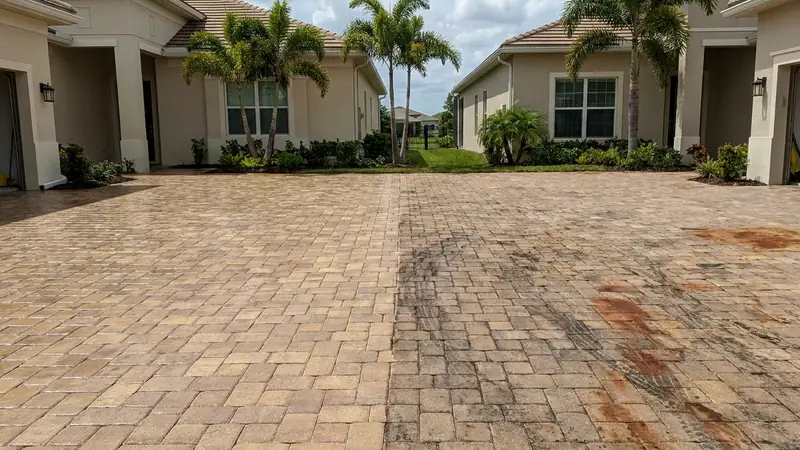
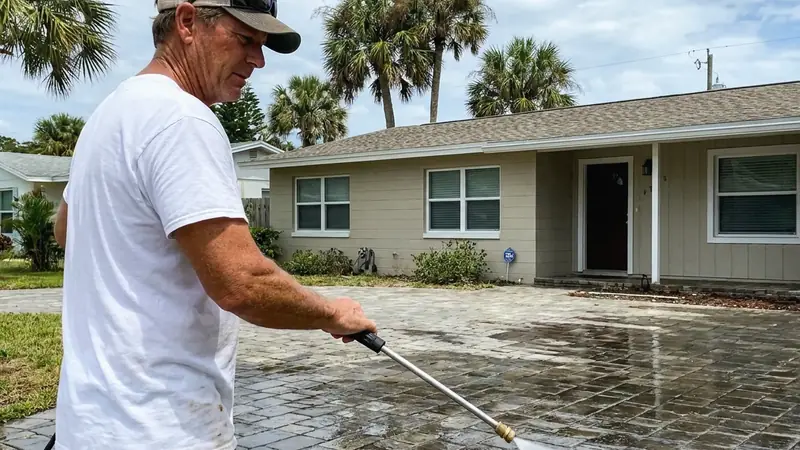
What do sealed pavers look like around Clearwater?
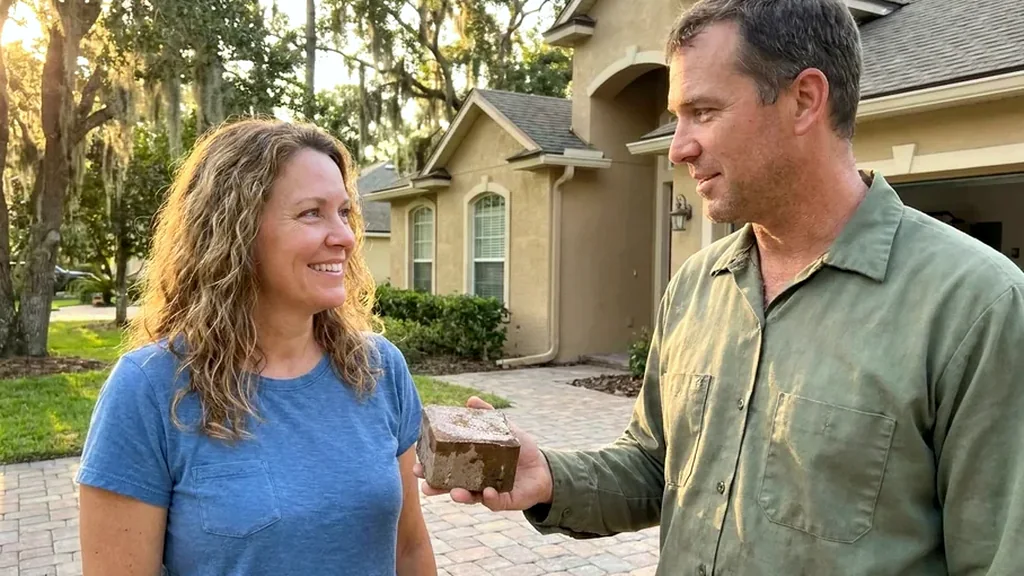
Why local matters in Clearwater
Someone who works Clearwater daily already knows the split between barrier-island and mainland lots. The first visit starts with the right questions, since salt is likely on one street and shade on the next. To get on the schedule, request a free estimate. That saves the first visit from guesswork.
The paver mix is wide too, from pool decks and lanais to canal-front patios and older mainland drives. Each wears differently, and a contractor who has seen all of them plans quickly. Call (727) 591-3365 and ask which jobs are most common near you. Nothing about your lot is new to them.
A city that is a third water has reason to care about wash water. The county asks that it stay out of storm drains, and a local crew works that into every job. Ask how the inlet at your curb would be covered when you request a free estimate. That habit protects the harbor.
What is the story behind the Clearwater causeway and bluff?
The first bridge to Clearwater Beach opened in 1915, and the two-lane drawbridge of the Memorial Causeway followed on November 11, 1927. Today the causeway is State Road 60 and a major hurricane evacuation route with a high bridge over the Intracoastal. It ties the mainland to the beach, so ask about your property when you request a free estimate. The causeway also shows how much of Clearwater is tied to the water.
The mainland rises to a bluff over Clearwater Harbor, where Fort Harrison stood around 1835 and where freshwater springs once flowed. The Fort Harrison Hotel opened there in 1926, and the Pinellas Trail now runs through the city. Homes on both sides of the water need a plan, so call (727) 591-3365 and describe yours. Both areas share the same wet season.
Frequently Asked Questions
What is the average cost to seal pavers in Clearwater?
Around Tampa Bay, companies publish $1.25 to $2.50 per square foot for the whole clean, sand and seal. In Clearwater, salt film, failed sealer and lost sand push a job up. Get the total square feet on the quote.
How much does it cost to seal outdoor pavers like a pool deck?
A pool deck falls under the same published spread, priced by area. A bigger deck costs more at the same rate, and the finish often differs from the driveway.
Is there a downside to sealing pavers in Clearwater?
The trade-offs are upkeep and timing. A coat wears out and gets renewed, a wet look scuffs sooner than matte, and rain can delay the dry surface you need.
How often should pavers be sealed near the beach?
Quotes usually run two to five years, and a Largo company says coastal sealer often lasts two to three. Salt exposure argues for the shorter end. When water sinks into the paver instead of beading up, the coat is finished.
Should a Clearwater pool deck be matte or wet look?
Matte usually suits a deck because it keeps more grip when wet and hides scuffs. A wet look deepens color but is slicker when wet. Say how the deck is used when you call, and the contractor can suggest a finish.
Can new sealer go over old sealer in Clearwater?
Not always. Water-based and solvent-based products do not mix, and a hazed or failed coat may need stripping first. The contractor identifies what is there before picking.
Where does the rinse water go on a Clearwater job?
Away from the storm drain. Pinellas County says businesses must keep wash water out of storm drains, because the drains reach the water untreated. Ask how your curb inlet gets covered.
Why do my Clearwater pavers look chalky or white?
A white haze can come from mineral salts moving to the surface or from moisture trapped under sealer. The contractor checks the cause during the wash. Sealing only works once the pavers are clean and fully dry.
Does a beachside Clearwater home need sealing more often than one inland?
Often, yes. A Largo paver company says coastal sealer typically lasts two to three years because of salt. Inland driveways may reach the longer end of the usual range. The contractor can read the surface and tell you where yours falls.
What is the average price to seal a Clearwater driveway?
Apply the published $1.25 to $2.50 per square foot to your driveway's area. Salt film and old sealer push it higher, and a clean, firm surface sits lower. The free visit turns that range into one number.
Do Clearwater Beach condos and homes get quoted the same way?
Yes, by area, though access matters. A Largo company lists barrier-island condos and canal-front homes among its Clearwater work, and carrying gear across a courtyard or over a dock takes longer than working on an open driveway. Mention access when you call.
How do I know when my Clearwater sealer has failed?
Watch for water that soaks in instead of beading, for a hazy or peeling patch, and for fading that returns within a season or two. A failed coat may need stripping before the next one. A Largo company says it strips failed or hazed sealer to bare paver first.
Nearby areas we serve
Ready for a Free Estimate in Clearwater?
Call (727) 591-3365 and tell us about your pavers.
Free, no obligation