
Lift rust, oil and tannin stains from pavers
Paver Stain Removal in St. Petersburg, FL
Call (727) 591-3365 for a free quote to clear rust, oil, algae and oak stains from your pavers.
- Brings out deeper paver color
- Fresh joint sand helps lock pavers in place
- Gives weeds less room to grow
- Makes the surface easier to keep clean
- Free estimate, no obligation
Request a Free Estimate
Free, no obligation.
Can a contractor remove paver stains in St. Petersburg, and how fast will I hear back?
Yes, a local contractor handles paver stain removal across St. Petersburg, FL, and you get a reply within one business day, often by the afternoon. The quote is free and carries no strings. To ask about a stain, call (727) 591-3365.
A stain is a message about where water, shade or metal touched the pavers, and the cure depends on the cause. Orange streaks, brown blotches, black film, white haze and oil spots each get a different product, tried on a small spot first. Send a photo description and the spot's location when you request a free estimate.
What is that mark on my pavers, and where did it come from?
Five causes cover most of what homeowners in this part of Pinellas County report. Each one below links a stain to a source that appears in published care guides, so you can match a mark on your drive to its likely cause. To describe yours to a contractor, call (727) 591-3365.
Orange or rust streaks
The University of Florida's IFAS Extension says most Florida well water is high in iron and that irrigating with it leaves orange stains. Metal furniture left out can leave similar rust.
Brown tannin blotches
Rusty's Pro Wash and Seal says live oak tannins soak into pavers that are unsealed or thinly sealed.
Black or green film
Rusty's lists humidity as food for mold, mildew and algae on pool decks, shaded patios and poorly drained areas.
White haze
Unilock describes efflorescence as a salt film from the pavers themselves, and Rusty's says saltwater pools speed it up.
Oil and grease
Unilock says vehicle oil should be dabbed, never rubbed, and that dedicated cleaners handle oil and grease.
Sunscreen and body oils
Outercle says these can work into natural stone around a pool and leave a dull patch.
Why do rust stains show up on St. Petersburg pavers?
Iron is the usual answer. The University of Florida's IFAS Extension says most Florida well water is high in iron and can leave rust deposits on anything it touches, and orange stains often follow irrigating with that water. A sprinkler head that hits a walk or a lanai wall each morning paints a stripe in the same place every time. The city also runs a reclaimed water system built in the 1970s that supplies customers citywide, so ask the contractor which source feeds your sprinklers. To have your streaks identified, request a free estimate.
Unilock says rust on natural stone needs a commercial product, and it asks for a spot test first. The same caution applies to concrete pavers, since a harsh product can lighten the surface in a patch. A contractor will try one on a hidden corner. To book that test, call (727) 591-3365.
How are oak tannin stains and algae treated in St. Petersburg?
Tannin and algae both love damp, shaded ground. Snell Isle and Kenwood are known for tree lined streets with mature oaks, and a Gulfport paver company says oak leaves and acorns left wet on pavers leach brown tannin that pressure alone may not lift. Algae gets a fungicide, the way a Tierra Verde paver company describes its wash, and tannin gets a product chosen for it. Both come out before sealer goes on, because Rusty's Pro Wash and Seal says sealing over stains or algae can trap them. To get a contractor's eyes on that spot, call (727) 591-3365.
If the shade is the cause, the stain will come back. A coat of sealer slows that, since Rusty's says thin or missing sealer lets tannin soak in. Trimming an overhanging branch helps as much as any cleaner, and a contractor can say which branch is the problem. Ask when you request a free estimate.
Can oil and grease be removed from paver driveways?
Usually, if it is treated early. Unilock says to blot fresh vehicle oil without rubbing, because rubbing spreads it, and its natural stone guide describes letting a cleaner sit before a gentle scrub and a hot rinse. Oil that has dried in is harder, and a granular absorbent is part of that fix. A contractor brings a degreaser matched to the surface. Note where the drips are when you call (727) 591-3365.
What are the white marks, and are they stains at all?
Often they are efflorescence, a salt film that works out of the paver. Unilock says the haze typically fades within two to three months, though it can linger up to a year, and that sealing should wait until it is gone. Rusty's Pro Wash and Seal says a saltwater pool speeds it up near the deck. An old sealer gone cloudy can look the same, which is why a contractor checks before choosing a treatment. To show a patch to a contractor, request a free estimate.
What does paver stain removal cost in St. Petersburg?
No page this site read prints a price for stain removal by itself. Most stain work is part of the clean, sand and seal range that Tampa Bay companies publish at $1.25 to $2.50 per square foot, and Rusty's Pro Wash and Seal lists minimum charges of $500 to $1,000 for small jobs. Rust, oil and heavy efflorescence may need their own products, which is why a written quote should itemize them. To get one for your pavers, call (727) 591-3365.
The table shows how each stain tends to fit into a price. A 300 square foot patio at the published range is about $375 to $750, and a 1,000 square foot driveway about $1,250 to $2,500. If stain removal is the only thing you want, ask for it priced alone and compare it with the bundle. Share the size and the stain list when you request a free estimate.
| Stain | Where it comes from near St. Petersburg | How it is usually priced |
|---|---|---|
| Algae and mildew film | Shade, humidity and a wet summer | Part of the wash, within the $1.25 to $2.50 per square foot bundle |
| Brown tannin blotches | Oak leaves and acorns left wet on the surface | Treated during the wash, so it sits inside the same range |
| Orange or rust streaks | Iron in well water, or metal furniture left outdoors | A separate product and spot test, so the quote may add a line for it |
| White efflorescence | Salts working out of new pavers, or a saltwater pool | A cleaner made for it, or a wait of two to three months |
| Oil and grease | Cars, grills and the bottom of the mower | A degreaser and dwell time, so it can add to the wash |
No page this site read publishes a price for stain removal by itself. Stain work is priced inside the $1.25 to $2.50 per square foot that Tampa Bay companies publish for cleaning, sanding and sealing, or as an extra line when a stain needs its own product. Rusty's Pro Wash and Seal lists minimum charges of $500 to $1,000 for small jobs.
Will sealing keep the stains from coming back?
It helps, but it does not make a surface stain proof. Travertine Mart says even a suitable sealer does not make stone stain proof, and Rusty's Pro Wash and Seal says thin sealer lets tannin and minerals soak in. A fresh coat on a clean surface makes the next rinse easier, and Unilock says most coats last three to five years. The process runs in order: stain treatment, a dry surface, then sealer. To plan both at once, call (727) 591-3365.
Why do pavers near a St. Petersburg pool stain faster?
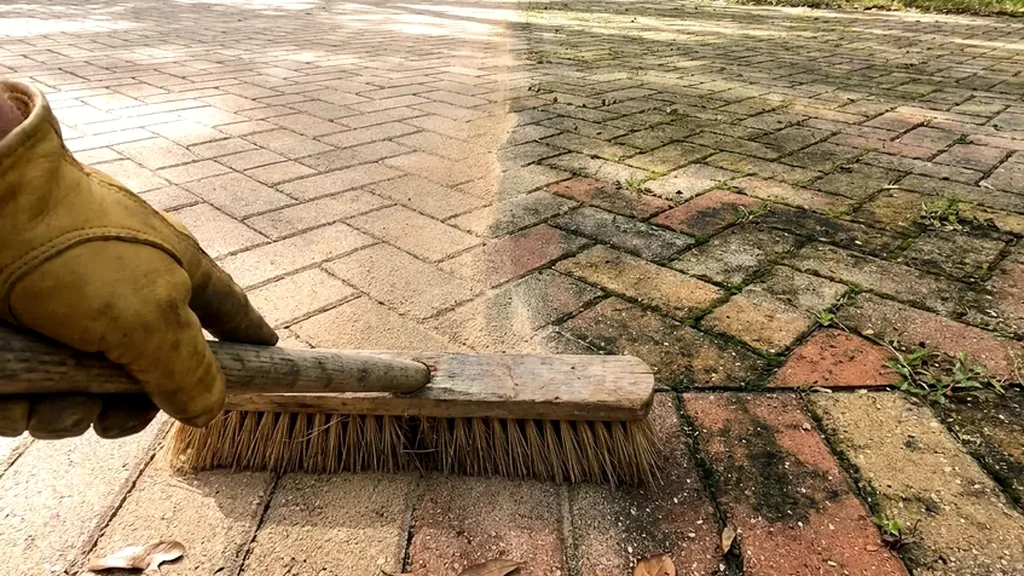
Pools bring splash, chemicals and bare feet. Outercle lists chlorine related staining, algae in damp areas and sunscreen that works into the surface, and Rusty's Pro Wash and Seal says constant moisture and chemicals wear a pool deck faster than a drive. A saltwater pool adds efflorescence. The St. Petersburg bay breeze carries salt too, and Rusty's names salt air as a load on pavers near the coast. If your deck is already stained, request a free estimate.
Does a stain mean the pavers need to be replaced?
Almost never. Stains sit on the surface or just under it, and most respond to the right product. Replacement is for pavers that crack, sink or heave, which sealing and cleaning do not fix, as Unilock notes. Restoration, covered on the paver restoration page, is the step between a wash and a full replacement. To find out which one fits, call (727) 591-3365.
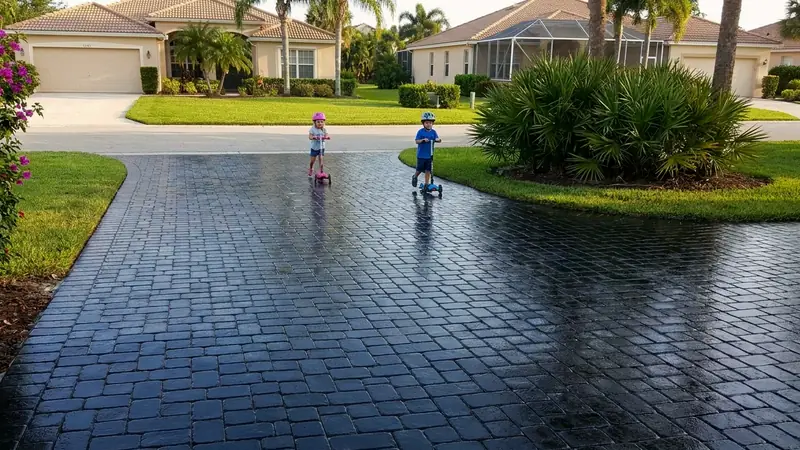
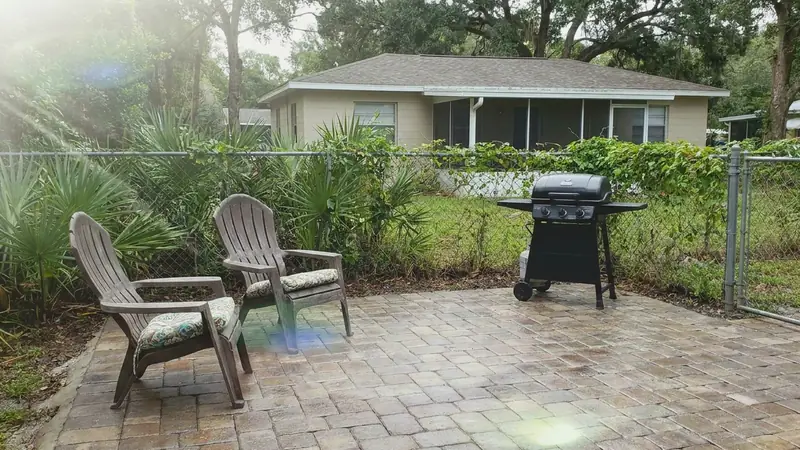
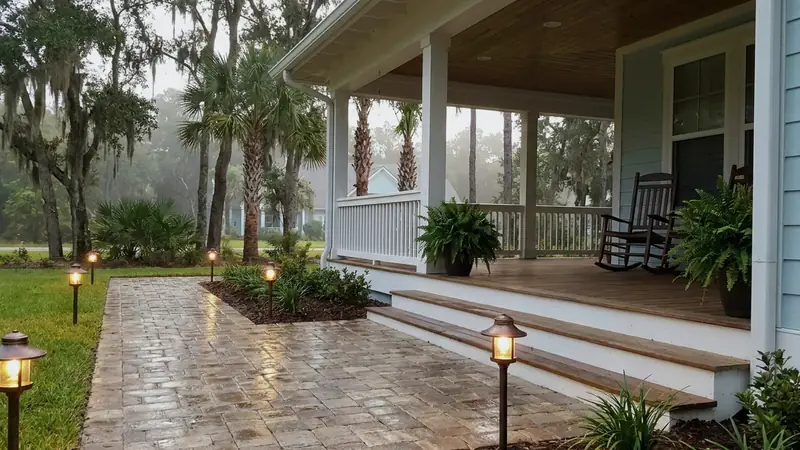
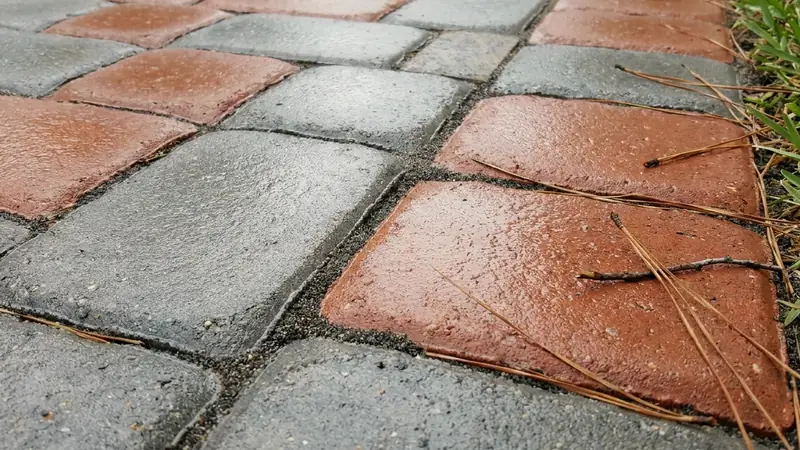
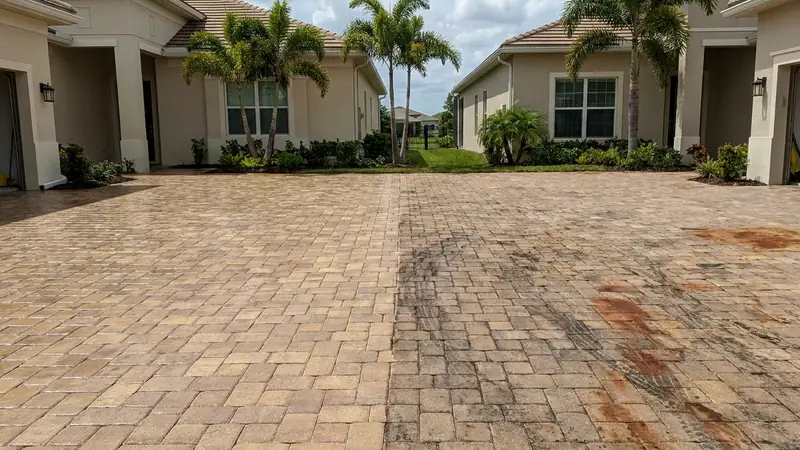
What do cleaned, stain free pavers look like around St. Petersburg?

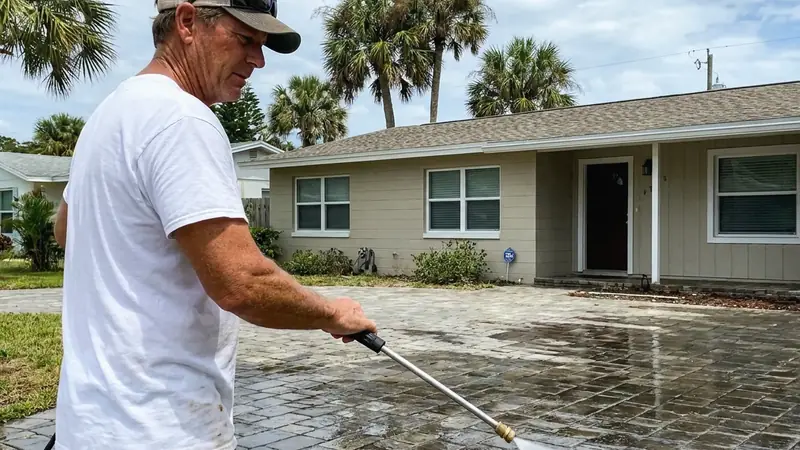
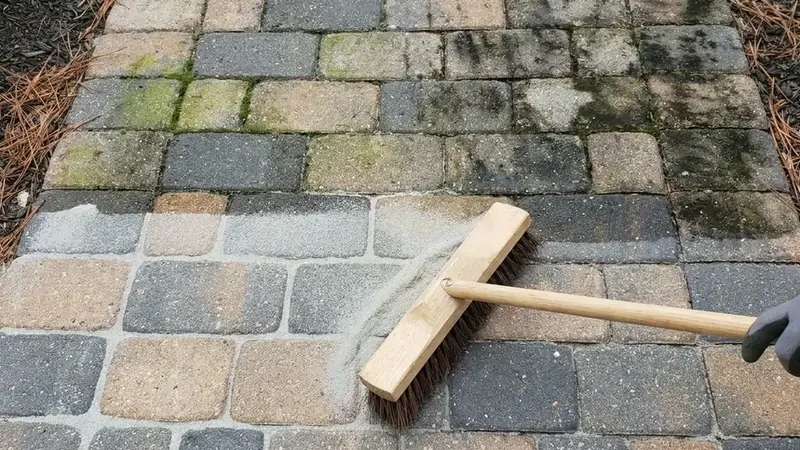
What do St. Petersburg homeowners ask about paver stain removal?
Can I use Dawn dish soap to clean my pavers?
Unilock's natural stone guide uses liquid detergent on grease, and its paver guide calls for dedicated cleaners on oil. Soap does little against rust, tannin or efflorescence, so a contractor picks the product from the stain, tests it on a small spot and rinses it well.
How do I clean my outdoor pavers?
A contractor treats stains first, washes with a flat surface cleaner at gentle pressure, then refills the joints with sand once the pavers dry. Unilock warns that high pressure can wash out joint sand, so a fanned nozzle about 12 inches away is the usual choice.
What should I clean pavers with before sealing?
That depends on what is on them. Rusty's Pro Wash and Seal lists pressure washing, mold and algae removal, oil stain removal and rust treatment, used as the surface needs. Unilock adds that pavers should dry for at least 24 hours before sealer goes on.
What causes orange stains on pavers in St. Petersburg?
Often iron. The University of Florida's IFAS Extension says most Florida well water is high in iron and that irrigating with it leaves orange stains. Metal furniture left outdoors can do the same, and Unilock says rust on natural stone needs a commercial product.
Why do my pavers have brown blotches under the oak tree?
Usually tannin. Rusty's Pro Wash and Seal says live oak tannins soak into pavers with no sealer or a thin one, and a contractor in Gulfport says leaves and acorns left wet leach brown color. The marks are treated before any coat goes on.
Are the white marks on my pavers efflorescence?
Often. Unilock says efflorescence is a salt film that typically fades in two to three months and can take up to a year. A saltwater pool speeds it up, according to Rusty's Pro Wash and Seal, and a clouded old coat can look the same.
Will sealing make my pavers stain proof?
No. Sealer slows liquid from soaking in and makes cleanup easier, and Travertine Mart says even a good sealer does not make stone stain proof. Rusty's Pro Wash and Seal also warns that sealing over a stain can trap it.
Can pressure washing remove stains without damaging pavers?
Only if the pressure is kept low. Unilock says high pressure can damage pavers and wash out joint sand, and a Gulfport paver company says older pavers and brick have softer faces that aggressive cleaning can scour. Stains are usually lifted by the right product more than by force.
Does stain removal cost extra?
Sometimes. Stains such as algae and tannin are handled during the wash, which sits inside the published $1.25 to $2.50 per square foot. Rust, oil and heavy efflorescence may need a separate product, so the written quote should name each one.
Which St. Petersburg neighborhoods and nearby towns can book paver stain removal?
A local contractor serves the places below. Find yours to open its page, and call (727) 591-3365 when it is missing.
Got a stain you want gone?
Call or send the short form, and a local contractor writes back within one business day, usually much sooner.
Free, no obligation