
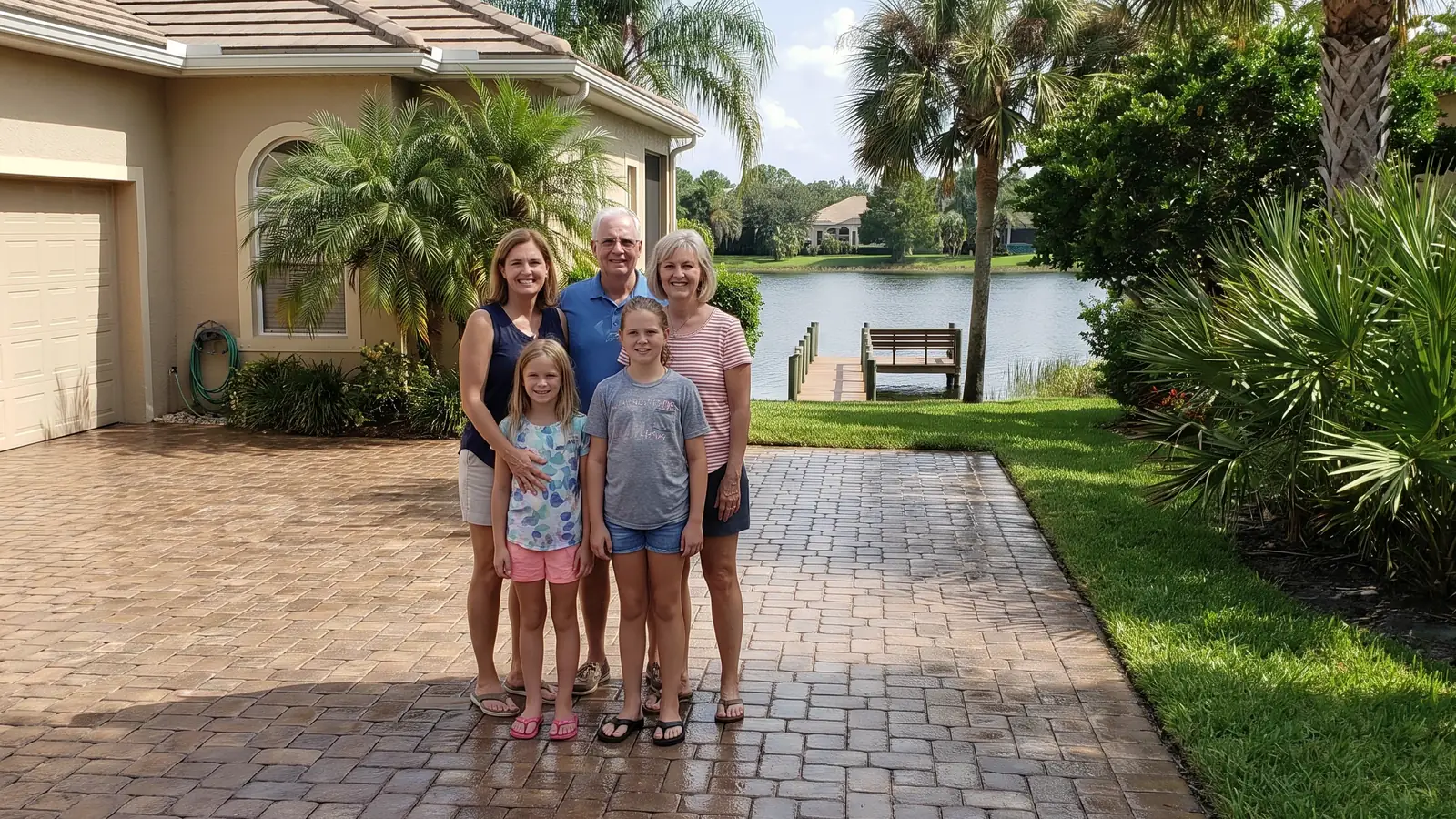
Paver sealing for Childs Park homes
Paver Sealing in Childs Park, FL
Childs Park homes on streets platted from 1911 onward get a free sealing estimate when you call (727) 591-3365.
- Brings out deeper paver color
- Fresh joint sand helps lock pavers in place
- Gives weeds less room to grow
- Makes the surface easier to keep clean
- Free estimate, no obligation
Request a Free Estimate
Free, no obligation.
Fast, careful paver sealing in Childs Park
Paver sealing is available in Childs Park, from the streets near Tangerine Avenue to the blocks along 49th Street. A local contractor will clean, re-sand and seal your driveway, walk or patio, and the estimate costs you a phone call. Call (727) 591-3365, and word comes back inside 1 business day, usually long before that.
Picture the front walk gone blotchy gray, with a weed in every seam. Clean it, refill the joints and add a coat, and the stone looks like one color again. When you are ready, you can request a free estimate and describe what you see, and nobody will pressure you to sign.
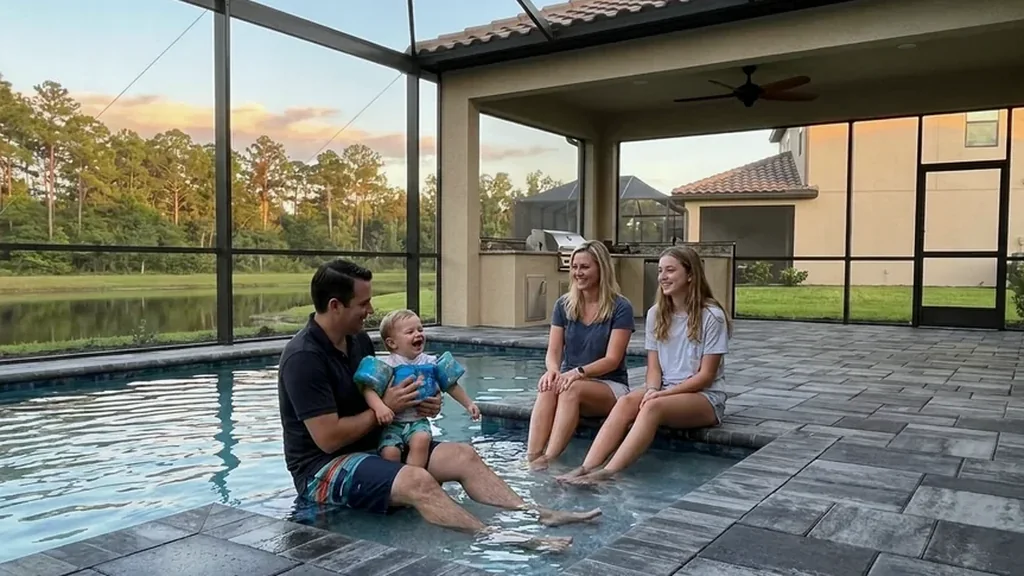
Why hire a local paver sealing contractor in Childs Park?
People in Childs Park own homes that range from the 1910s to the 1940s and later, so no two driveways have the same history. A local contractor who asks about yours is worth a call, and you can request a free estimate to start.
Walk-through, no fee
A Childs Park visit costs nothing, and the price arrives in writing.
Tampa Bay price band
Across Tampa Bay the published price is $1.25 to $2.50 per square foot for the whole job.
Matte or wet look
On a driveway, matte hides tire marks. Wet look deepens the color but scuffs show up faster.
No hurry
Choose the date and the finish yourself. Asking for a price commits you to nothing.
Get Your Free Estimate in Childs Park
Tell us about your pavers in Childs Park.
Free, no obligation
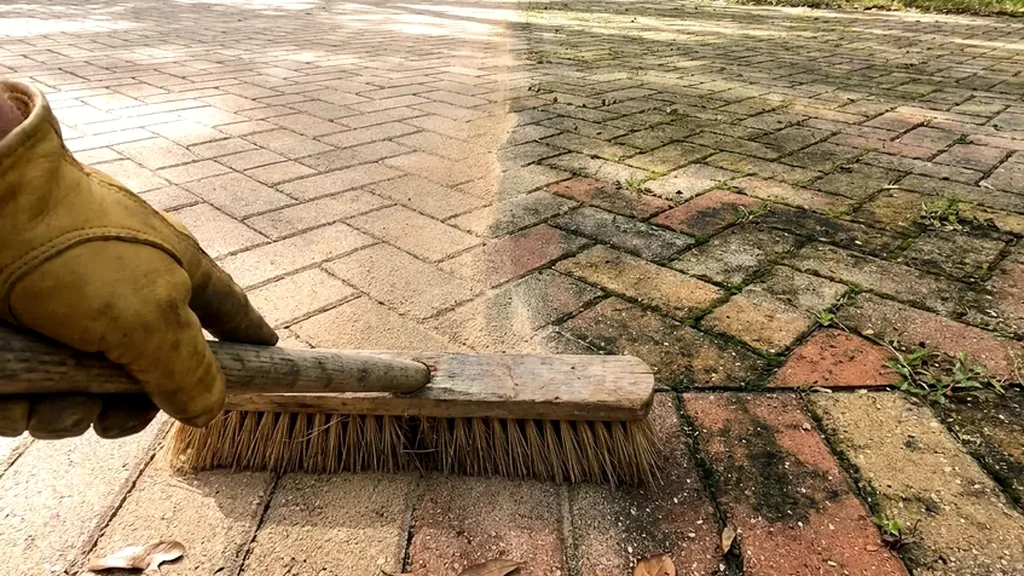
What paver problems show up most in Childs Park?
Joint sand that rain carries off
Myakka fine sand, the Florida state soil, is sand from top to bottom, and rain passes through it fast. Childs Park gets most of its rain from June through September, about 52 inches over a year. Heavy storms push sand out of the joints between pavers, and once the seams open, soil washes in and weeds take root. You may see small piles of sand at the foot of a downspout or the low end of the drive. Topping up the sand and sealing can often happen in one visit. Ask the contractor to look at the low end of the drive first, since that is where sand collects after a storm and where the seams open earliest.
Shade growth on older lots
Streets platted in 1911, the 1920s and the 1940s have had many years for trees to fill in. Grapefruit groves once grew where houses stand now, and lots marketed in the 1910s promised buyers tropical fruits and flowers, so yards here were planted early. Advice from landscape experts says moss, lichens and algae take hold on pavers only in heavy shade where damp lingers. A walk beside a thick hedge or a big oak is the usual spot, and the green film is slick, so it is worth cleaning before someone slips. Many owners are surprised how bright the stone looks once the film is gone, and the wash is often the biggest change you see.
Coats put down by earlier owners
About 70 percent of occupied homes in ZIP 33711 are owner-occupied, so many owners have lived here a long time. Childs Park Elementary opened in 1924 on land donated by Dr. Julius Childs, which shows how long families have put down roots. A driveway may have been sealed years ago by someone who is gone, with a product nobody wrote down, and water-based sealer cannot be rolled over an old solvent-based layer. If you bought recently, ask the seller about any paving work. The contractor reads the surface and decides from there. A buyer who moved in last year may know none of this, and that is fine.
Rust marks from sprinklers
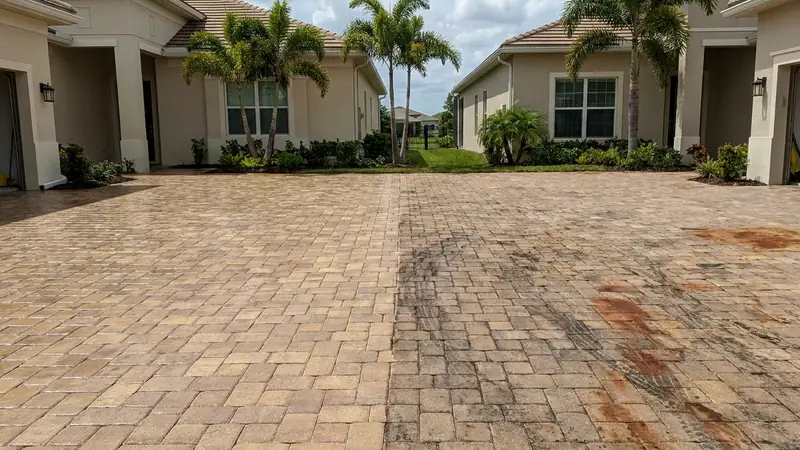
Extension notes from the University of Florida say iron runs high in most Florida well water. When that water runs through sprinklers, it can leave orange rust marks wherever the spray lands, and a paver driveway beside a lawn is a common target. Many Childs Park lawns sit right against the driveway, so one head can mark the same few feet again and again. Those stains need treating before sealing, since a coat would trap them underneath, and a head aimed a little differently can end the pattern. A fixed sprinkler head can be adjusted by a landscaper before the work starts, so the new coat is not marked again.
Sun and tires on the driveway
A driveway takes the heaviest load of any paver surface around a house. Tires press on the same strips every day, and the sun beats on them all afternoon, so color fades and the surface wears thin where the wheels run. A driveway added later may sit beside an older walk with a different coat, so the contractor treats each surface on its own. A matte coat hides tire marks better than a wet look, and a coat on a patio takes the scuffs from chairs and planters instead of the paver face. Chairs and planters can be moved before the visit, so the contractor can reach the whole surface.
Does paver sealing change from one Childs Park subdivision to the next?
Platted in different decades
It can, because the streets were laid out at different times. Childs Park proper was platted in 1911 by the Childs family, and the rest of the area filled in during the 1910s, 1920s and 1940s. Say which decade fits your street when you request a free estimate.
Why house age matters to the job
Homes of different ages carry different driveways, edges and old coats. Mention the year your house went up when you request a free estimate.
The 1920s subdivisions
The 1920s brought Fuller's Garden Homes in 1922, Victory Heights in 1923, Vinsetta Park in 1924, Sunny Slope in 1924 and Tangerine Gardens in 1925. Vinsetta Park sits between 44th and 49th Streets, and Tangerine Gardens lies north of 18th Avenue. If yours is one of these, call (727) 591-3365.
Where industry replaced homes
After 1950, industrial sites took over most of Fuller's Garden Homes. Call (727) 591-3365 and name your subdivision, and the contractor can plan around it.
Where Childs Park begins and ends
Childs Park runs from 5th Avenue South up to 22nd Avenue, between Highway 19 and 49th Street, and its eastern edge meets Gulfport. ZIP 33711 had 20,121 residents at the 2020 Census. To confirm your block is covered, call (727) 591-3365.
Who decides about the pavers
That is a settled, mostly owner-occupied area, which means you are likely the one deciding about the pavers. To get a price for yours, request a free estimate.
What does paver sealing cost in Childs Park?
What the published Tampa Bay range says
Published prices across Tampa Bay run $1.25 to $2.50 per square foot to clean, sand and seal. A bigger drive costs more in total but less per foot, and an old coat to deal with first costs more than bare stone. To see a figure for your own drive or walk, request a free estimate.
How the shape of the paving changes the work
Shape matters too. A square of drive goes quickly, while a curved walk edged with beds takes patient hand work. Ask about your own layout when you request a free estimate.
What fences and hedges add
A fence or a hedge beside the paving slows things further. To learn which of these show up on your lot, call (727) 591-3365.
Why a short walk can cost more per foot
A Tampa Bay paver company says small jobs often meet a minimum charge of $500 to $1,000, so a short walk can cost more per foot than a large drive. Check for a minimum charge before you line up the quotes side by side. To check it for your walk, call (727) 591-3365.
| Paved area | Typical example | Clean, sand and seal |
|---|---|---|
| 300 sq ft | Small patio or walkway | $375 to $750 |
| 600 sq ft | Two car driveway | $750 to $1,500 |
| 1,000 sq ft | Large driveway or pool deck | $1,250 to $2,500 |
| 1,500 sq ft | Driveway plus pool deck | $1,875 to $3,750 |
Math based on the $1.25 to $2.50 per square foot that Tampa Bay paver companies publish. Your contractor sets the actual price after seeing the surface. Repairs, leveling and stripping failed sealer are usually extra.
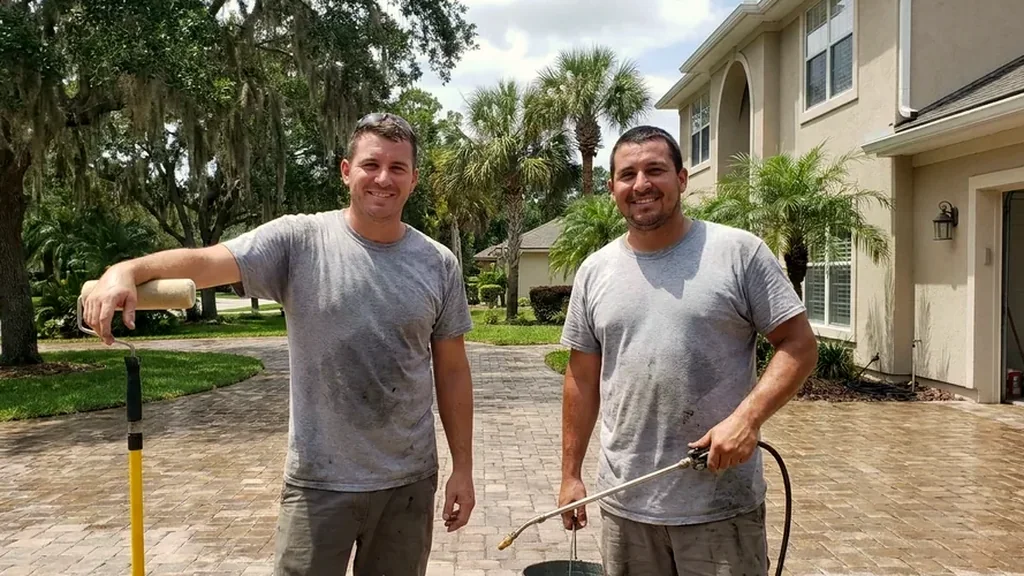
How does a paver sealing job work in Childs Park?
Look at the lot
The contractor walks your Childs Park lot, from the front walk to the back patio, and notes shade, slope, lifted stones and any old coat. Say what year the house went up, since a 1920s block and a 1940s block differ. Nothing is priced until this look is done. Notes from the look go into a written estimate. If you remember a past repair, a patched edge or a coat of unknown age, say so now, since it saves time later. That first look usually settles how many hours the job needs and whether one day will do.
Wash it down
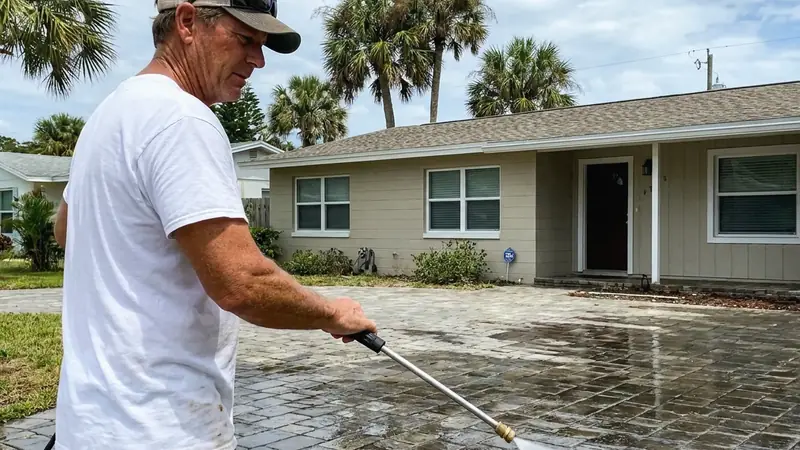
The wash takes off gray film, green growth and sprinkler rust marks. Plants and siding stay covered. Anything stubborn gets a second pass, and oil by the garage gets a closer look. The pressure is set to clean without driving out sand that is still doing its job, and rinse water is steered toward the lawn, not the street.
Fill the seams
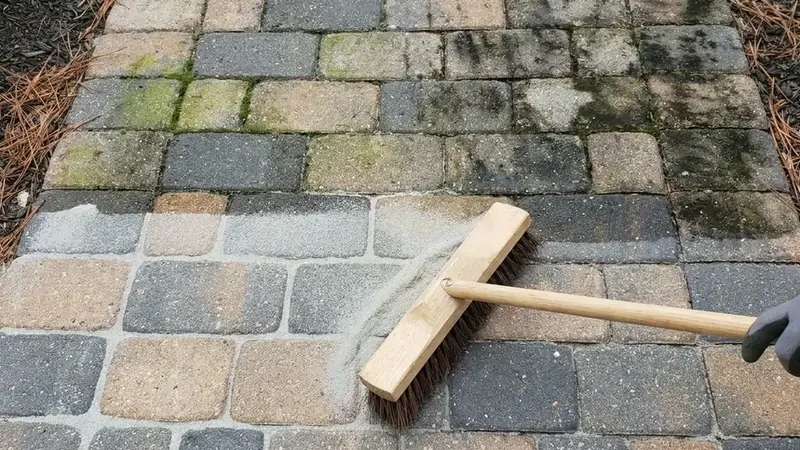
Sandy ground lets rain strip joint sand over the years, so every seam gets new sand and a last sweep. Full seams lock the stones and starve weeds of soil. Joint sand is swept in until the seams sit level with their neighbors. This is the step that keeps a Childs Park drive from rocking under a car after the next downpour.
Let it dry
Sealer wants dry stone. After a summer shower the joints can hold water long after the top looks dry, and a walk under a thick hedge is the slowest to come around. The contractor moves the date rather than rush. A thick hedge or an old oak can keep a walk wet for a day or more. Dew counts too, so early starts may slide to mid-morning.
Seal it and hear the plan
The coat goes on in the sheen you chose. You are told when feet, cars and chairs may return, and a thin spot gets touched up. Keep the product name for next time. The contractor tells you the wait for each area, from walking to parking. A last look at the edges beside the lawn catches thin spots before the work wraps up.
Complete paver services in Childs Park
The four moves of a sealing job
Think of a Childs Park job as four moves: wash, refill the joints, wait for dry stone, seal. Done in that order, nothing dirty ends up under the coat. To hear how long it would take on your drive or walk, call (727) 591-3365.
Drive, walk and back patio
Homes laid out between 1911 and the 1940s tend to have a drive, a front walk and sometimes a patio out back. Tires press on the first, shade works on the second, and sun and chairs work on the third. Each gets its own measurement. When you request a free estimate, list every paved spot.
Water-based or solvent-based coats
Sealers come water-based or solvent-based, and either one in a matte or wet sheen. A past owner's solvent-based coat limits your options, because the water-based kind cannot go over it. Matte is quiet and forgiving, while wet look is rich but shows scuffs. To talk it over, call (727) 591-3365.
Timing the job around summer rain
June through September brings most of the rain, and sealer needs dry stone, so the contractor looks for a run of dry days. A walk under a thick hedge may stay wet after the drive is dry. To find a window on your street, request a free estimate.
Questions to ask before you hire
- Some of my pavers have a chalky film. Does that get dealt with before sealing?
- Do you walk the property with a tape or a wheel before you give me a price?
- After a downpour, how many dry days do you want before you start?
- If I give you one flat number, which jobs on the checklist does it pay for?
- I have travertine around the pool. Does it need a different product from my driveway pavers?
- My pool uses salt. Will the sealer or the rinse water bother it or the screen cage?
- What do you do to protect my lanai furniture, my shrubs and the lawn edge?
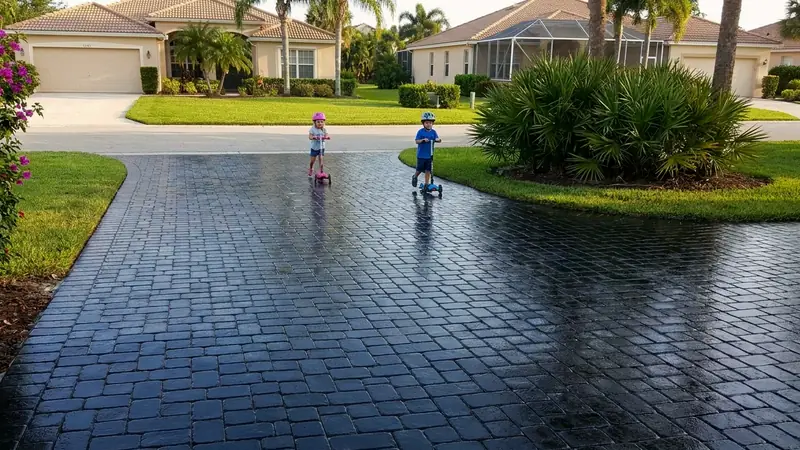
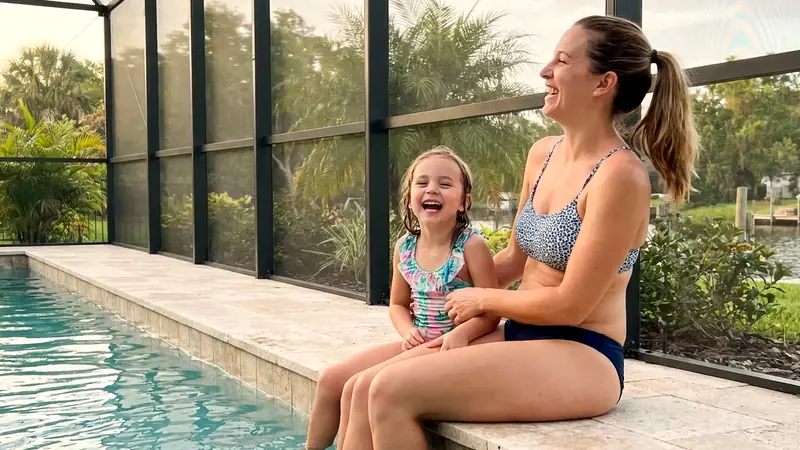
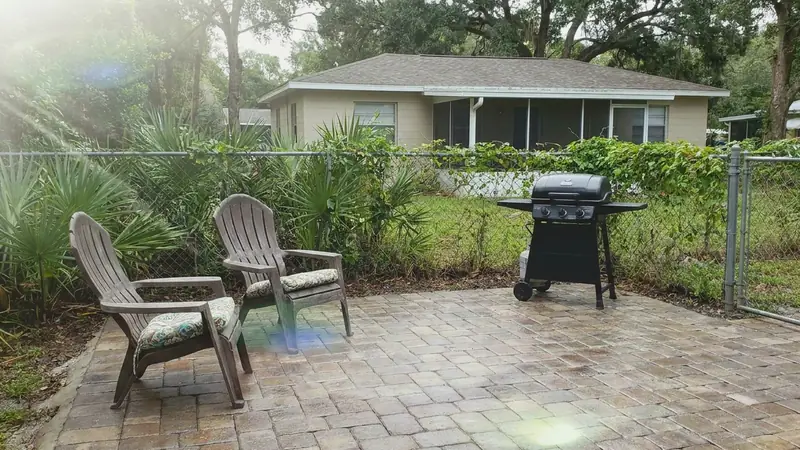
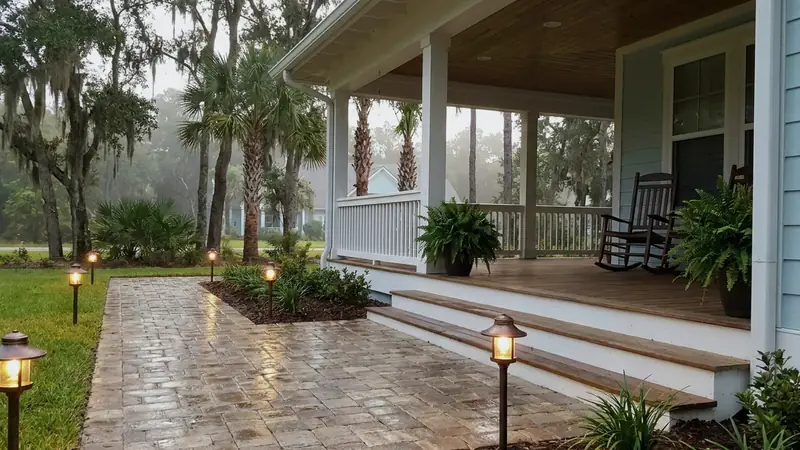
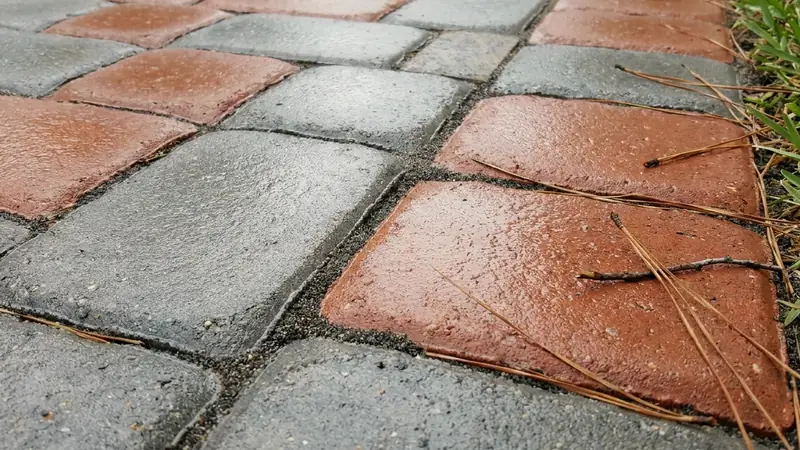
What do sealed pavers look like around Childs Park?
Why local matters in Childs Park
Streets platted decade by decade
Someone who works in Childs Park understands the streets were platted over several decades. A 1920s block and a 1940s block can sit minutes apart with quite different driveways. Ask about your block's age when you request a free estimate.
Questions asked at the first visit
That history shapes the questions asked at the visit. For someone who knows these south Pinellas streets, call (727) 591-3365.
A wet half year and sandy ground
Weather is the second reason. Most of the area's rain falls between June and September, and sandy ground drains fast. Call (727) 591-3365 to hear how that plays out on your street.
Building the schedule around dry days
A contractor used to that pattern builds the schedule around dry days. Ask how a Childs Park job would be timed when you request a free estimate.
Surprises under older pavers
Older homes bring surprises, from mixed pavers to patched edges. Someone who has seen the area asks about past repairs and old coats. Call (727) 591-3365 and mention any past repairs.
Work meant to last for years
Many Childs Park owners stay for years, so the work should last. If that sounds like you, request a free estimate and say when your house was built.
Orange stains from sprinkler water
Sprinkler spray is another thing to look for. Most Florida well water is high in iron, and orange stains often show up where iron-rich irrigation water lands. Those marks get treated during cleaning, since a coat of sealer would lock them in. To have the edges of your walk checked, request a free estimate.
What did Childs Park look like before the houses?
Groves, farms and an ostrich farm
It was groves, farms and a famous ostrich farm. Jerry Wells opened the St. Petersburg Ostrich Farm and Zoo in 1908 along 18th Avenue, with more than 50 ostriches, and an April 1913 fire closed it. Call (727) 591-3365 and say whether your street ran through any of it.
Grove land that became homesites
Golden Glow Groves, between 46th and 49th Streets South, later became homesites. If your street sits on old grove land, you can request a free estimate and mention it.
Streetcar and grower paths
The streetcar line on Tangerine Avenue, now 18th Avenue South, was finished in 1905. Disston Avenue, now 49th Street, began as a path that took growers to boats on Clam Bayou. Name your street when you request a free estimate, and the visit can be planned around it.
The railroad and the Pinellas Trail
The Tampa and Gulf Coast Railroad arrived in 1914 and followed the route the Pinellas Trail uses today. Near any of these Childs Park landmarks, call (727) 591-3365 and give your cross streets.
Schools and the community center
Childs Park Elementary opened in 1924 on land donated by Dr. Julius Childs, and Thurgood Marshall Middle School now occupies the former campus. The Childs Park Community Center was built in December 1977. Near either one, call (727) 591-3365 and give your cross streets.
Frequently Asked Questions
What is the average cost to seal pavers in Florida?
Prices that companies publish across Tampa Bay land between $1.25 and $2.50 per square foot to clean, sand and seal. Where you land depends on the size of the area, what coat is already down and the sheen you pick. A Childs Park estimate is free, and the price per square foot makes bids easy to compare. Ask for the figure on paper, with each area on its own line, and you can hold two bids side by side.
What are the downsides of sealing pavers in a Childs Park yard?
Three things come up. Sealer needs dry stone, a water-based coat cannot go over a solvent-based one, and a wet look shows scuffs early. The coat also wears out, so plan on a repeat, with companies commonly quoting two to five years between coats. Weigh them against how the pavers look today, since a faded drive may already be losing sand.
Should you seal your pavers in Florida?
Plenty of owners do, because sun, rain and shade wear on bare stone. A coat holds the color and keeps sand in the seams. At the visit, the contractor can say whether your pavers are ready. If a paver is cracked or sunken, the contractor says so first and prices the repair apart from the coat.
How long does a coat last on a Childs Park driveway?
Companies commonly quote two to five years. A sunny drive wears faster than a shaded walk, and heavy tire use shortens it. Ask the contractor to check how your coat is holding.
Which sealer works for pavers in Florida?
Pick a water-based or solvent-based product, then a matte or wet look. An old solvent-based coat limits you, since a water-based product cannot go over it. Ask which one goes down at your house, and why that one. Find out if a second coat is planned and how long the wait is between the two.
Does a Childs Park driveway need anything special before sealing?
A wash, fresh joint sand and a dry surface come first, along with rust marks and green growth. The contractor also checks for dips and loose stones at the visit. Loose edges, soft spots and any low puddle areas are noted at the same visit.
Can I get a price for several paved areas at my Childs Park home?
Yes. List the drive, the walk, the patio and any pool deck, and each is measured and priced alone. You then see what every area adds to the total. A shaded walk and a sunny drive often sit at opposite ends of the price range, so seeing both lines helps.
How long should I stay off newly sealed pavers in Childs Park?
Expect the contractor to name the wait, which shifts with the product and the weather. A rainy week may slide the date. Cars, pets and furniture stay off until you hear it is safe. Hoses, sprinklers and pets all stay off the area until the contractor says the coat is firm.
Ready for a Free Estimate in Childs Park?
Call (727) 591-3365 and tell us about your pavers.
Free, no obligation