
Bring worn, hazy pavers back to life
Paver Restoration and Resealing in St. Petersburg, FL
Call (727) 591-3365 for a free quote on restoring cloudy, faded or tired pavers at your home.
- Brings out deeper paver color
- Fresh joint sand helps lock pavers in place
- Gives weeds less room to grow
- Makes the surface easier to keep clean
- Free estimate, no obligation
Request a Free Estimate
Free, no obligation.
Can a contractor restore my pavers in St. Petersburg, and how quickly do I get a reply?
Yes, a local contractor can restore and reseal pavers across St. Petersburg, FL, and a reply arrives within one business day, usually long before that. The quote is free, and you choose whether to book. To get one moving, call (727) 591-3365.
Restoration is for pavers that have been through a coat of sealer already, or just a lot of summers. Cloudy patches, flat color and low, empty joints are the usual reasons people call. The goal is a driveway or deck that looks the way it did when it was laid and sheds dirt more easily afterward. Describe what you see when you request a free estimate.
Is my paver problem a restoration or just a wash?
That depends on what the surface looks like. Faded color, green film and shallow joints often need only a wash, new sand and a coat. A white, cloudy or flaking coat points to restoration, because the old layer has to come off first. Peter's Pressure Washing says sealing over a failing coat only makes the haze worse. For a quick opinion on your pavers, call (727) 591-3365.
Wash, sand and seal
Fits pavers with sound sealer or none at all, where the problem is dirt, growth and empty joints.
Strip and reseal
Fits pavers with a coat that has turned white, hazy or sticky, because the old film must leave before a new one goes on.
Repair first
Fits pavers that sink, rock or hold water, since Unilock says sealing does not cure poor drainage or a weak base.
Stain treatment
Fits rust, oil or tannin marks, which are handled before any coat so they are not locked in.
Why do sealed pavers turn white or cloudy?
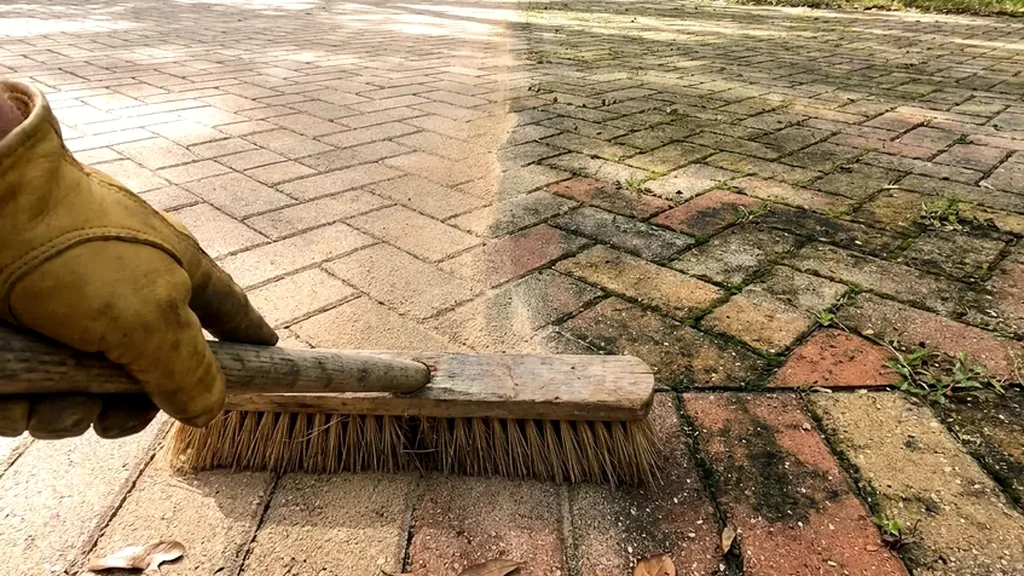
Moisture is the common culprit. Peter's Pressure Washing lists water vapor trapped under an oil based acrylic coat, sealer put on too thick, poor prep and a new product that does not suit the old one. Unilock describes the same whitish film and ties it to trapped moisture, too much sealer or an incompatible old coat. In a place that gets about 52 inches of rain a year, with a wet season from June through September, vapor has plenty of chances to get under a coat. To find out what happened to yours, request a free estimate.
A cloudy coat is not a sign that sealing was the wrong choice. It usually means the coat was wrong for that surface or went on when the pavers were not dry. Unilock asks for clear skies for 24 to 48 hours before and after, and a dry surface. Mention when and how yours was last done if you remember, then call (727) 591-3365.
How does the paver restoration process work, step by step?
The sequence matters more than any single product. A paver company serving Tierra Verde lists evaluation, a wash with a rotary surface cleaner and a fungicide, new sand and then sealer. Peter's Pressure Washing adds a stripper that breaks the bond with the old coat and a surface cleaner with vacuum recovery that lifts it away. To hear how that would go at your address, call (727) 591-3365.
1. Evaluate
The contractor maps cracked or sunken pavers, hazy areas, stains and places where water stands.
2. Strip the old coat
A stripper loosens the failed sealer, and a surface cleaner with vacuum recovery takes the residue away.
3. Wash and treat
Algae gets a fungicide, rust and oil get their own products, and the surface is rinsed clean.
4. Refill the joints
Angular silica or polymeric sand goes into every gap, packed and swept so it hardens in place.
5. Reseal
Thin, even sealer goes on a dry surface, and the contractor says when feet and cars may return.
Why do paved surfaces in St. Petersburg wear out in different ways?
The city has older streets and newer lots side by side. Kenwood's historic district holds homes built from 1912 to 1945 with brick avenues and large oaks, so a front walk there collects leaf drip and stays damp. Out in Disston Heights, NeighborhoodScout says 92.2 percent of homes went up between 1940 and 1969, so many driveways have been through several owners and several coats. Pavers under a bay breeze take salt, and those under oaks take tannin. To describe your own yard, call (727) 591-3365.
Downtown shows the other side of the story. St. Petersburg began paving streets with brick around 1903, there were once 339 miles of brick street, and about 81 miles remain. A driveway of old brick pavers can be restored, but its softer face asks for gentler washing. Say what your pavers are made of when you request a free estimate.
What does paver restoration cost in St. Petersburg?
No Tampa Bay company this site read prints a stripping rate, so the figures here are built from pieces that are published. Companies around Tampa Bay list $1.25 to $2.50 per square foot to clean, sand and seal. A Florida paver cost guide puts chemical stripping, a full clean, sand and a reseal at $3.50 to $5.00 or more per square foot, and says stripping failed sealer can double a project. To get a written figure for your pavers, request a free estimate.
Rusty's Pro Wash and Seal frames it from the other direction: routine cleaning and sealing at $1,000 to $3,000, against $3,000 to $8,000 or more for major restoration. That gap is the cost of waiting. Ask whether stripping is priced by the square foot or as one line when you call (727) 591-3365.
| Area | Typical example | Clean, sand and seal only | Strip, clean, sand and reseal |
|---|---|---|---|
| 500 sq ft | Courtyard or lanai | $625 to $1,250 | $1,750 to $2,500 or more |
| 800 sq ft | Pool deck | $1,000 to $2,000 | $2,800 to $4,000 or more |
| 1,000 sq ft | Driveway | $1,250 to $2,500 | $3,500 to $5,000 or more |
| 1,500 sq ft | Driveway plus walk | $1,875 to $3,750 | $5,250 to $7,500 or more |
The middle column is the $1.25 to $2.50 per square foot that Tampa Bay companies publish. The last column multiplies the $3.50 to $5.00 or more per square foot that a Florida paver cost guide gives for chemical stripping, a full clean, sand and a reseal. No Tampa Bay company this site read prints a stripping rate, so treat the last column as a planning figure and rely on your written quote.
Is it worth restoring my pavers, or should I replace them?
Restoring is the lower cost choice when the pavers are sound and the base is firm. Replacement makes sense when pavers have cracked in many places or the ground beneath has settled. Unilock says sealing does not repair drainage trouble or a weak base, and a restored surface hides neither. Ask the contractor to press on any wobbly spots and to explain what is surface and what is structure. For a second opinion before you commit, call (727) 591-3365.
What are the choices in finish after restoration?
Rusty's Pro Wash and Seal lists natural, wet look and high gloss finishes, and says the wet look is the most requested around Tampa Bay. Unilock says a wet look deepens color, a penetrating matte keeps traction and gloss can be slippery when wet. Around a screened pool, grip usually matters more than shine. To compare samples of two finishes, request a free estimate.
How long should restored pavers be left alone?
A Tierra Verde paver company gives 4 hours before walking, a day before furniture goes back and 48 hours before cars, and Rusty's Pro Wash and Seal says about 24 hours for feet and 48 to 72 for vehicles. Unilock asks for sprinklers to stay off while the coat cures. Treat the longer figure as your plan if rain is in the forecast. To pick a day that suits the weather, call (727) 591-3365.
What do restored pavers look like at St. Petersburg area homes?
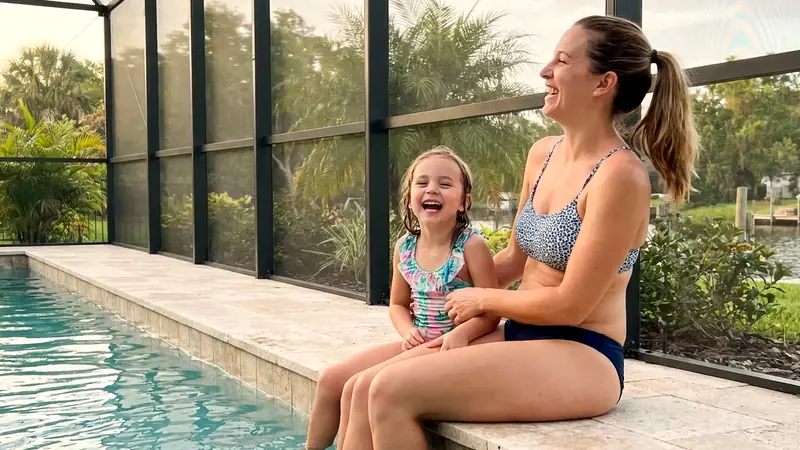
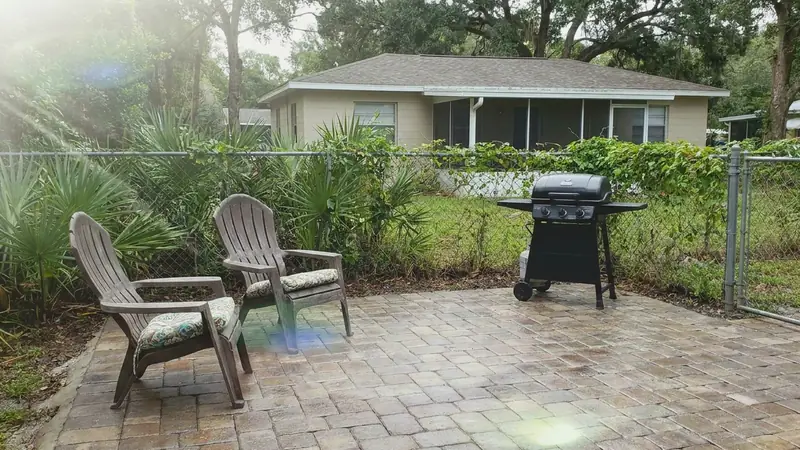
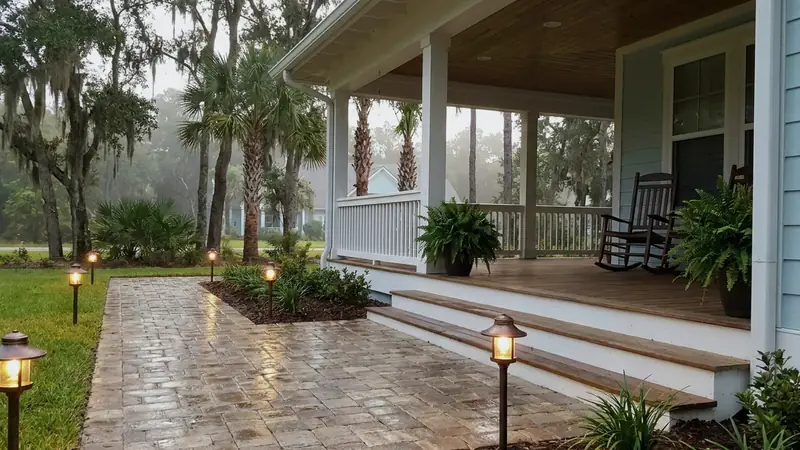
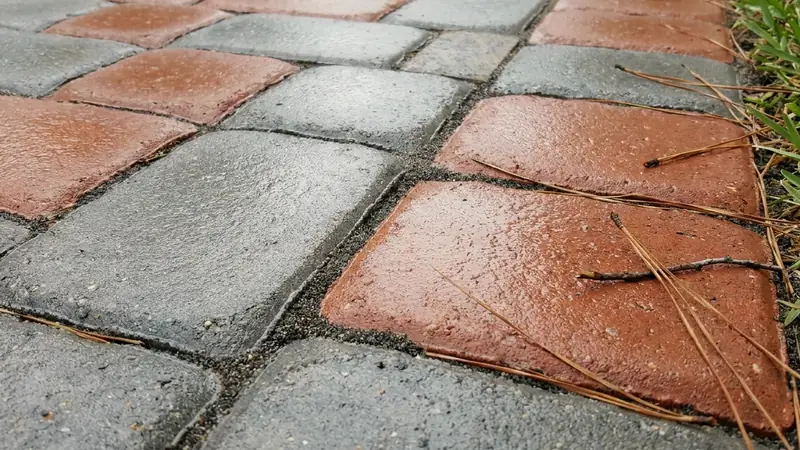
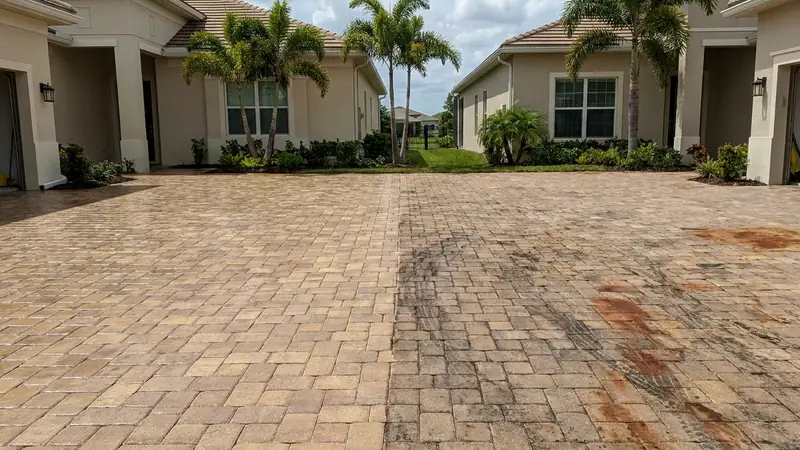
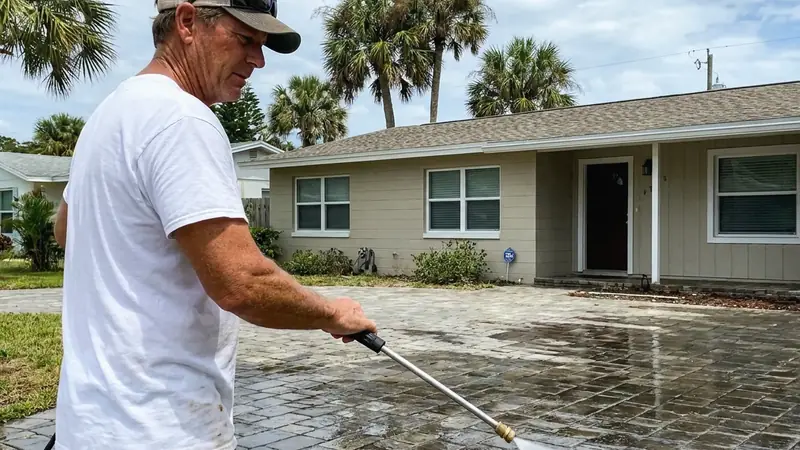
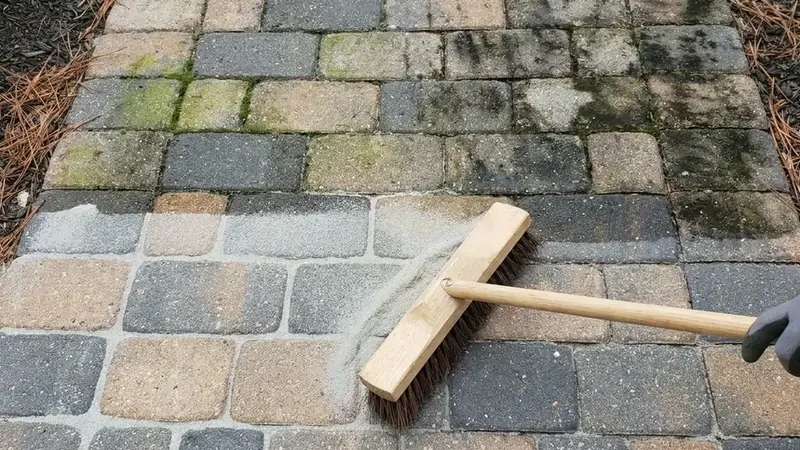
What do St. Petersburg homeowners ask about paver restoration?
Is the water in St. Petersburg, Florida hard?
Sources differ. A water hardness lookup lists the city system as moderately hard and one St. Petersburg ZIP code as harder. Rusty's Pro Wash and Seal says hard water from irrigation leaves mineral deposits that build up faster on pavers with thin or worn sealer, which is one reason old pavers look chalky.
Can I seal my pavers myself?
You can buy sealer, but the order of work decides how it turns out. Rusty's Pro Wash and Seal warns that sealing over stains or algae can trap them, and Unilock says sealer put on too heavily can leave a whitish film. A contractor can look at your coat before you decide how much to take on.
Can I put new pavers over old pavers?
Usually no. Unilock says sealing does not cure poor drainage or a weak base, and the same is true of a new layer on top of a bad one. Pavers that sink, rock or hold water need the base fixed first, which is a different job from restoration.
How can I make my old pavers look new again?
Wash them, refill the joints with sand and, where it makes sense, seal. If an old coat has gone white or cloudy, a Hillsborough County pressure washing company says the old sealer is stripped first, because sealing over it makes the haze worse.
What is paver restoration?
It is the full reset: strip a failed coat, wash the surface, refill the joints with sand and apply fresh sealer. Rusty's Pro Wash and Seal puts routine cleaning and sealing at $1,000 to $3,000 and major restoration at $3,000 to $8,000 or more.
How do I know if my old sealer has failed?
Look for whitening, cloudiness or haze. Peter's Pressure Washing lists trapped water vapor, a coat put on too thick, poor prep and a product that did not match the old coat as the usual causes. Unilock describes the same whitish film.
How much does paver restoration cost in St. Petersburg?
No Tampa Bay company this site read prints a stripping rate. A Florida cost guide puts strip, clean, sand and reseal at $3.50 to $5.00 or more per square foot, against the published $1.25 to $2.50 for clean, sand and seal alone.
Does restoration include new joint sand?
Yes, it normally does. Heavy summer rain washes sand out of the joints, according to Rusty's Pro Wash and Seal, and Unilock says polymeric sand has to cure with the residue swept off. A Hillsborough County company describes sanding to about 1/8 to 1/4 inch below the chamfer.
Which St. Petersburg neighborhoods and nearby towns get paver restoration quotes?
Quotes are free from the bayfront to the Gulf side of Pinellas County and across Tampa Bay. Look for your place below, and call (727) 591-3365 when it is missing.
Ready to bring your pavers back?
Use the short form or call, and a local contractor answers inside one business day, often sooner.
Free, no obligation